

Proper seated positioning is an essential element in the care of patients with reduced mobility, especially in geriatric, health care and hospital settings. In cases where the patient has limited trunk control, maintaining a stable and safe posture becomes a real care challenge.
When seating is not managed correctly, the risks of sliding and loss of stability increase significantly, which can lead to falls, discomfort, muscle fatigue and even clinical complications. For this reason, its proper application under professional criteria is a key tool to ensure the patient’s safety and well-being.
The importance of seated positioning in patients with poor postural control
First of all, it is important to understand that prolonged sitting requires correct body alignment. However, in patients with muscle weakness, neurological disorders or functional impairment, this alignment cannot be maintained autonomously.
When is it necessary?
However, not all patients require chair positioning systems. After a professional assessment, the patient is found to be unable to maintain a stable upright position on his or her own.
Generally, its use is recommended when signs such as:
- Obvious loss of trunk control
- Maintained anterior tilt
- Repeated sliding in the seat
- Severe muscle weakness or neurological pathologies
- Risk of falls while seated
In these cases, it acts as a functional support, whose objective is not to restrict, but to guarantee the stability, safety and comfort of the patient, always respecting good care practices.
Key principles for safe and effective positioning
For the positioner to perform its function properly, it is essential that the system used meets a series of basic criteria.
Proper anatomical fit
First of all, the system must adapt correctly to the patient’s body, providing support in the necessary areas such as the torso, shoulders and pelvic area, without generating pressure points or discomfort.
Landslide prevention
In addition, effective restraint should prevent the patient from leaning forward or sliding down in the seat, while maintaining a stable position during the time of use.
Ease and speed of installation
On the other hand, the systems must allow a fast, simple and safe application, facilitating the work of the professional and reducing the physical effort in the daily intervention.
Breathable and hygienic materials
Finally, the use of technical and breathable fabrics favors daily hygiene, improves patient comfort and allows prolonged use without compromising the quality of care.
SALVACLIP® Safe: a specific solution for postural restraint in an armchair
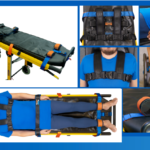
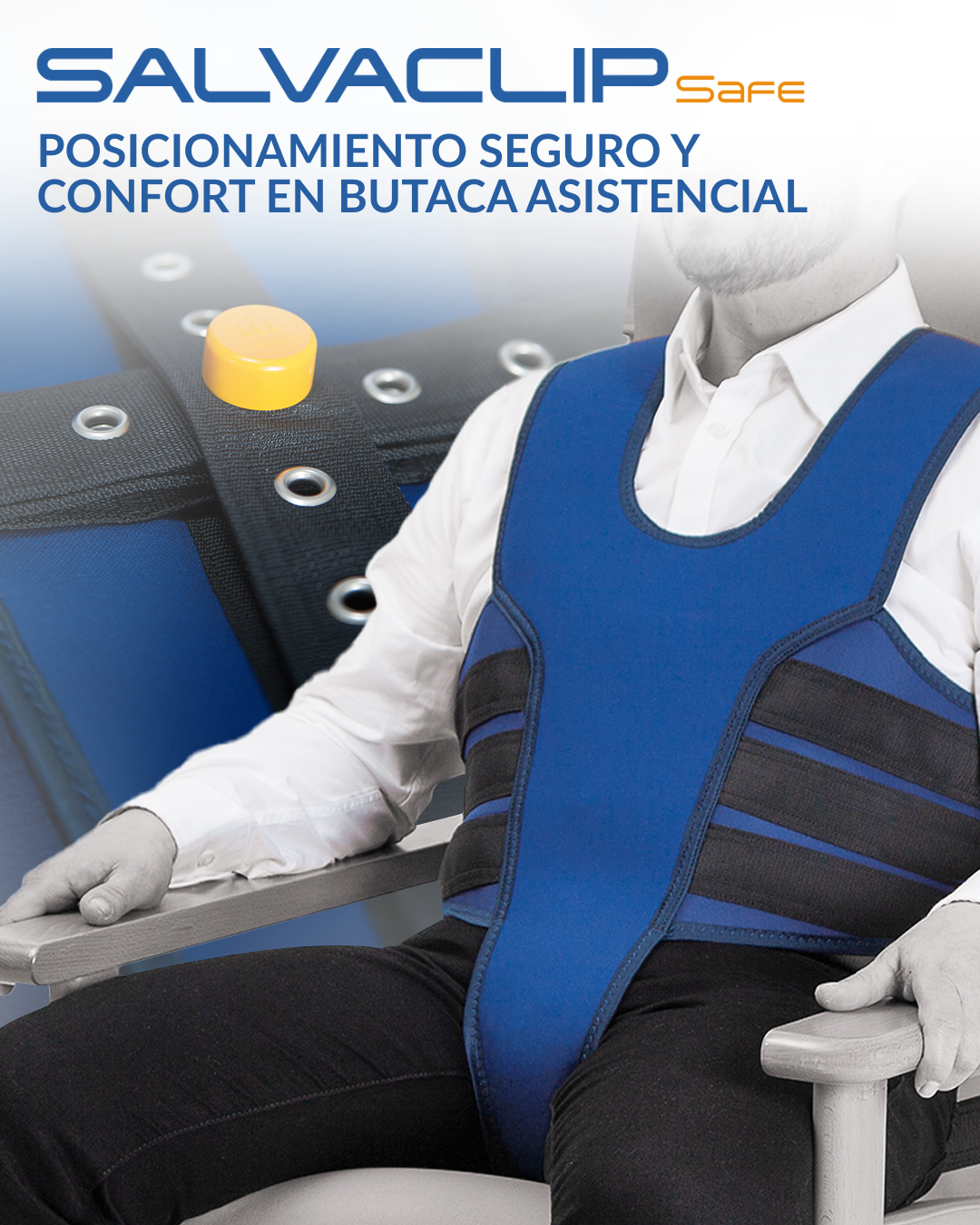
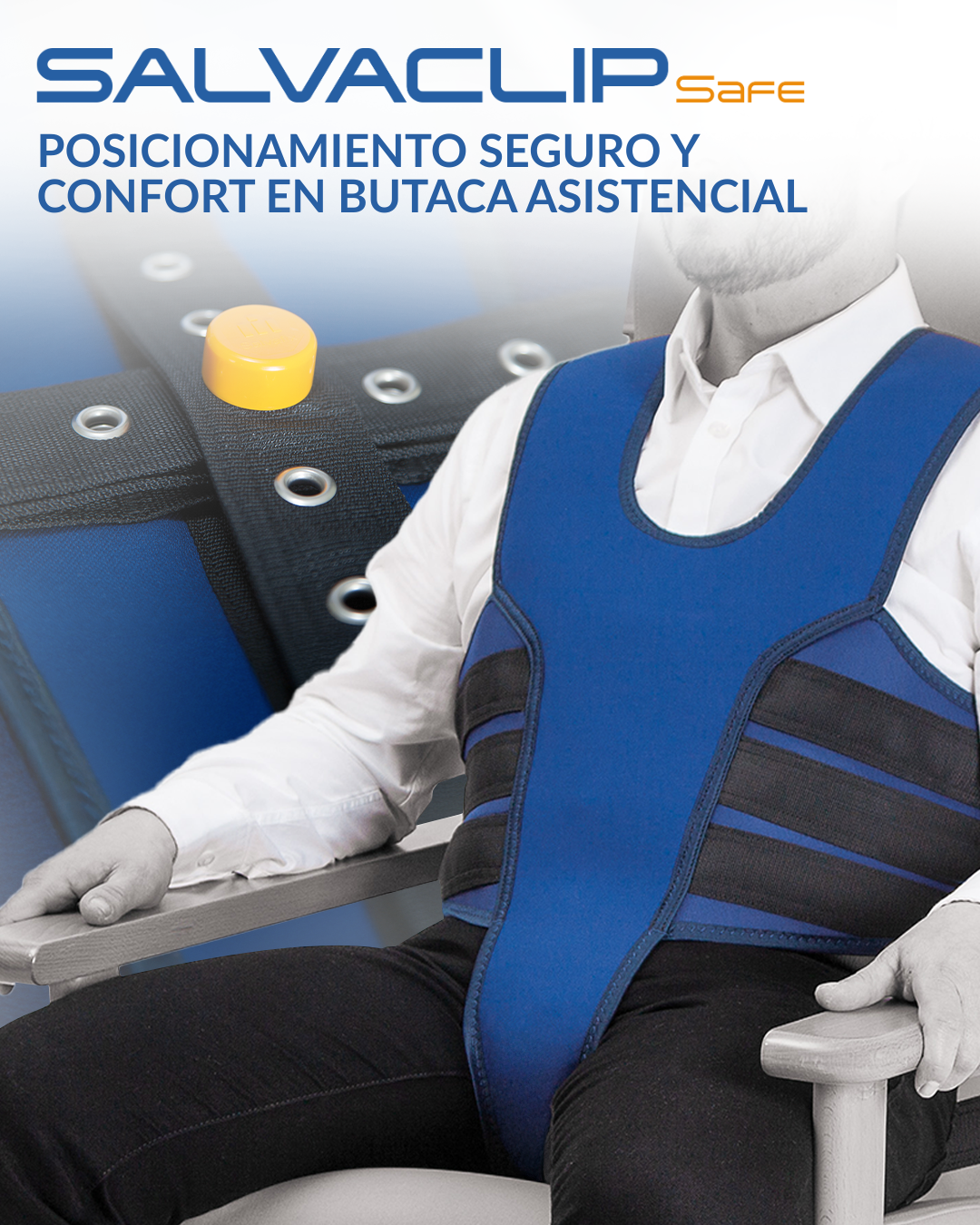
In this context, the SALVACLIP® Safe perineal bib for armchair has been designed as an effective solution for patients with limited trunk control who need additional torso and shoulder support to maintain an upright position.
Its design incorporates an integrated perineal band, whose main function is to prevent the patient from sliding forward or downward, providing stable and secure positioning.
In addition, the SALVACLIP® Safe has a safety locking system with magnetic opening, which allows a quick and reliable placement, optimizing the intervention time of the healthcare professional.
Its technical features include:
- High-strength 45 mm reinforced straps, ensuring a firm and comfortable hold
- Three-dimensional, breathable and water-repellent polyester fabric for easy hygiene and daily maintenance
Thanks to this combination of design and materials, the SALVACLIP® Safe is aligned with best practice in postural restraint, providing safety for the patient and peace of mind for the care team.
Benefits in care settings
The implementation of properly designed postural positioning systems brings clear benefits for both the patient and the professionals:
- Increased safety and stability in seated position
- Reduction of the risk of falls and slips
- Improved comfort over extended periods of time
- Decrease in constant readjustments
- Optimization of caregiver time and effort
If you are looking for a professional solution for a chair or recliner, the SALVACLIP® Safe offers an effective, safe and adapted response to the real needs of the care environment.